
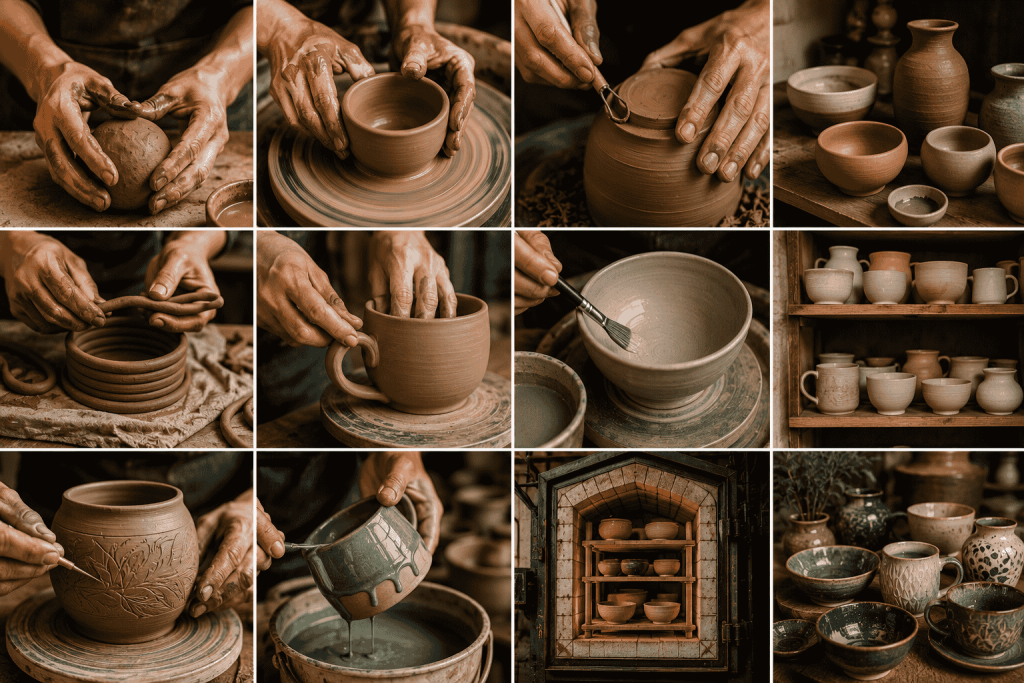
Every beautiful ceramic mug, serving platter, vase, or bowl starts with a simple piece of clay. What transforms that clay into a functional work of art is the skill and creativity of the potter.
Pottery is one of the oldest crafts in human history, and over thousands of years, artisans have developed a variety of pottery techniques to create unique ceramic products. From hand-shaped clay pots to perfectly crafted wheel-thrown ceramics, these techniques continue to be used by artisans around the world.
Whether you’re a pottery enthusiast, a ceramic collector, or simply curious about how handmade ceramics are made, understanding pottery techniques helps you appreciate the craftsmanship behind every piece.
What Are Pottery Techniques?
Pottery techniques are the methods used to shape, decorate, and finish clay before it is fired in a kiln.
These techniques determine:
- The shape of the product
- Surface texture
- Decorative details
- Strength and durability
- Overall appearance
Different pottery methods create different styles and artistic effects, making every ceramic piece unique.
Why Pottery Techniques Matter
The technique used by a potter influences the final product in many ways.
Good pottery techniques help create:
- Better craftsmanship
- Stronger ceramic products
- Beautiful designs
- Unique textures
- Functional everyday items
The skills developed through years of practice allow artisans to turn simple clay into timeless works of art.
Hand Building: One of the Oldest Pottery Techniques
Hand building is one of the earliest pottery methods and remains popular today.
This technique involves shaping clay entirely by hand without using a pottery wheel.
Benefits of Hand Building
- Greater creative freedom
- Unique designs
- Organic shapes
- Artistic expression
Hand-built pottery often has a natural and handmade appearance that many people love.
Pinch Pot Technique
The pinch pot method is often the first technique beginners learn.
How It Works
A ball of clay is gently pinched using fingers and thumbs to create a hollow form.
This technique is commonly used to make:
- Small bowls
- Decorative dishes
- Artistic pottery pieces
Despite its simplicity, pinch pottery can produce beautiful results.
Coil Building Technique
Coil building involves rolling clay into long rope-like coils and stacking them together.
Common Uses
- Large pots
- Decorative vases
- Sculptural ceramics
The coils are blended together to create strong and durable structures.
This technique allows artisans to create larger pieces that may be difficult to achieve using other methods.
Slab Building Technique
Slab building uses flat sheets of clay that are cut and assembled into different forms.
Popular Products
- Serving platters
- Plates
- Trays
- Decorative boxes
Modern ceramic designers often use slab building to create contemporary geometric designs.
Wheel Throwing Technique
Wheel throwing is one of the most recognized pottery techniques worldwide.
Using a spinning pottery wheel, artisans shape clay with their hands while the wheel rotates.
Products Commonly Made
- Mugs
- Bowls
- Cups
- Vases
- Dinnerware
Wheel throwing allows for precise and symmetrical shapes, making it ideal for functional ceramics.
Slip Casting Technique
Slip casting is commonly used when multiple identical pieces are needed.
How It Works
Liquid clay, known as slip, is poured into plaster molds.
Once the clay hardens, the mold is removed, revealing the final shape.
Advantages
- Consistency
- Efficiency
- Detailed designs
- Mass production capability
Many modern ceramic manufacturers use slip casting for commercial production.
Carving and Engraving Techniques
After clay begins to dry, artisans can carve decorative patterns into the surface.
Popular designs include:
- Floral motifs
- Geometric patterns
- Traditional artwork
- Textured effects
Carving adds depth, personality, and artistic value to ceramic products.
Pottery Glazing Techniques
Glazing is one of the most exciting stages of pottery making.
A glaze is applied to the ceramic surface before firing.
Benefits of Glazing
- Adds color
- Creates texture
- Improves durability
- Provides water resistance
Different glazing methods produce unique visual effects.
Gloss Glaze
Creates a shiny, reflective finish.
Popular for:
- Dinnerware
- Mugs
- Decorative ceramics
Matte Glaze
Provides a smooth, non-reflective appearance.
Ideal for:
- Modern ceramics
- Minimalist designs
- Contemporary home décor
Reactive Glaze
Creates natural variations during firing.
Each piece develops unique colors and patterns.
This makes every ceramic item one of a kind.
Texturing Techniques
Texture adds character and visual interest to pottery.
Artisans create texture using:
- Leaves
- Fabric
- Carving tools
- Natural materials
Textured ceramics are especially popular in modern interior design.
The Importance of Kiln Firing
Firing is the stage that transforms soft clay into durable ceramic.
Bisque Firing
The first firing hardens the clay and prepares it for glazing.
Glaze Firing
The second firing melts the glaze and creates the final finish.
Proper firing ensures the ceramic product is strong, durable, and long-lasting.
Traditional Pottery Techniques in India
India has a rich pottery heritage that continues to inspire modern ceramic production.
Artisans across the country use techniques passed down through generations.
Among India’s pottery centers, Khurja is particularly famous for its ceramic craftsmanship and beautiful glazed pottery.
The city continues to blend traditional techniques with modern design trends.
Modern Pottery Trends
Today’s ceramic artists are experimenting with:
Organic Shapes
Natural and asymmetrical designs inspired by nature.
Earthy Colors
Popular shades include:
- Beige
- Sage green
- Terracotta
- Ivory
Handmade Textures
Visible craftsmanship is increasingly valued by consumers.
Sustainable Production
Many potters focus on environmentally friendly materials and processes.
Why Handmade Pottery Is Special
Handmade pottery offers something that mass-produced products cannot.
Every piece reflects:
- Human creativity
- Artisan skill
- Individual character
- Authentic craftsmanship
Small variations in shape and glaze make each ceramic product unique.
These imperfections are often what make handmade pottery so appealing.
Final Thoughts
Pottery techniques are the foundation of ceramic craftsmanship.
From hand building and wheel throwing to glazing and firing, each method contributes to the beauty, functionality, and uniqueness of handmade ceramics.
Understanding these techniques helps us appreciate the time, skill, and artistry involved in creating every ceramic piece.
Whether you’re decorating your home, collecting pottery, or simply enjoying a handcrafted mug, the craftsmanship behind pottery continues to make everyday objects feel special and meaningful.