
Stoneware vs. Porcelain vs. Earthenware
What’s the Real Difference?
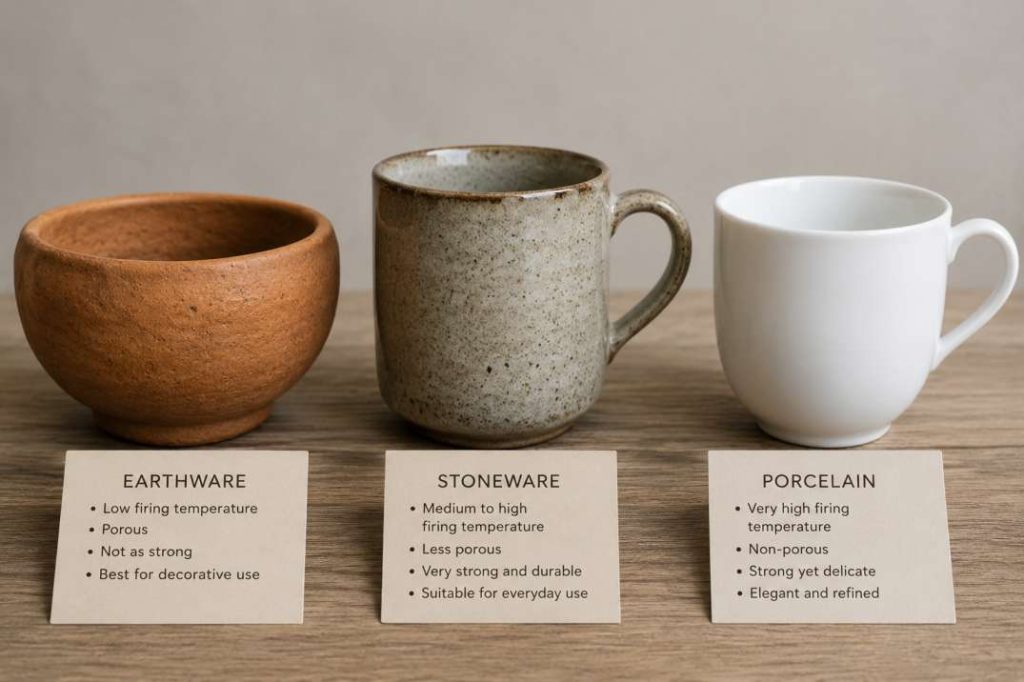
Have you ever picked up a cup or plate and wondered why some feel super strong and smooth while others feel soft or a little rough? Even though they may all look similar, they are actually made in very different ways.
Stoneware, porcelain, and earthenware are all types of pottery made from clay. But the way they are made, the heat used, and the materials inside them change everything — from strength to weight to even how long they last.
Let’s understand all of this in the simplest way possible.
First of All — What Is Pottery?
Pottery is made by shaping wet clay into objects like plates, bowls, cups, vases, or tiles. After shaping, the clay is heated inside a very hot oven called a kiln.
This heating process is called firing.
The temperature inside the kiln changes the clay completely. The hotter the clay gets, the stronger and harder it usually becomes.
This is where stoneware, porcelain, and earthenware become different from each other.
Stoneware vs. Porcelain vs. Earthenware
1. Earthenware — The Oldest and Softest Type
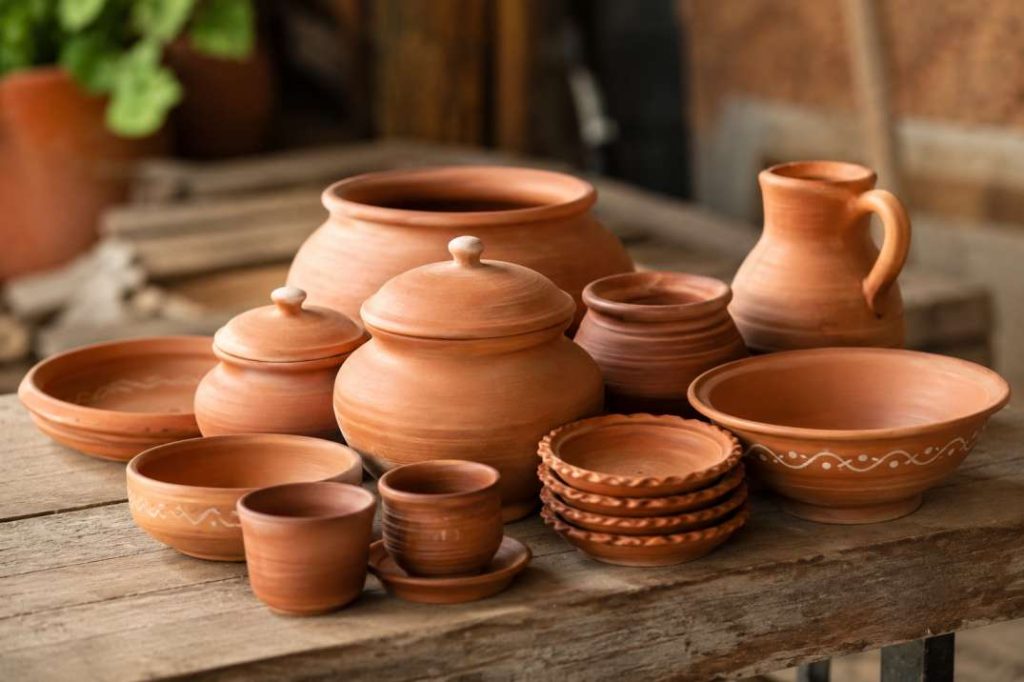
Earthenware is one of the oldest forms of pottery used by humans. Ancient people made pots, water containers, and cooking items using this method thousands of years ago.
It is made from simple clay and fired at a lower temperature, usually around 1000°C to 1150°C.
Because the temperature is lower, the clay does not become fully hard inside. Tiny holes remain in the material.
These tiny holes are called pores.
That means earthenware can absorb water unless it is covered with a protective layer called glaze.
How Earthenware Feels:
* Slightly rough
* Softer than other pottery
* Heavier and thicker
* More natural and handmade looking
Common Examples:
* Flower pots
* Traditional clay cups
* Decorative pottery
* Terracotta items
Advantages:
* Looks warm and artistic
* Great for decoration
* Easier and cheaper to make
Disadvantages:
* Breaks more easily
* Absorbs water
* Not as strong for daily heavy use
You can think of earthenware like a biscuit. It becomes hard after baking, but still has tiny air spaces inside.
2. Stoneware — Strong and Everyday Friendly
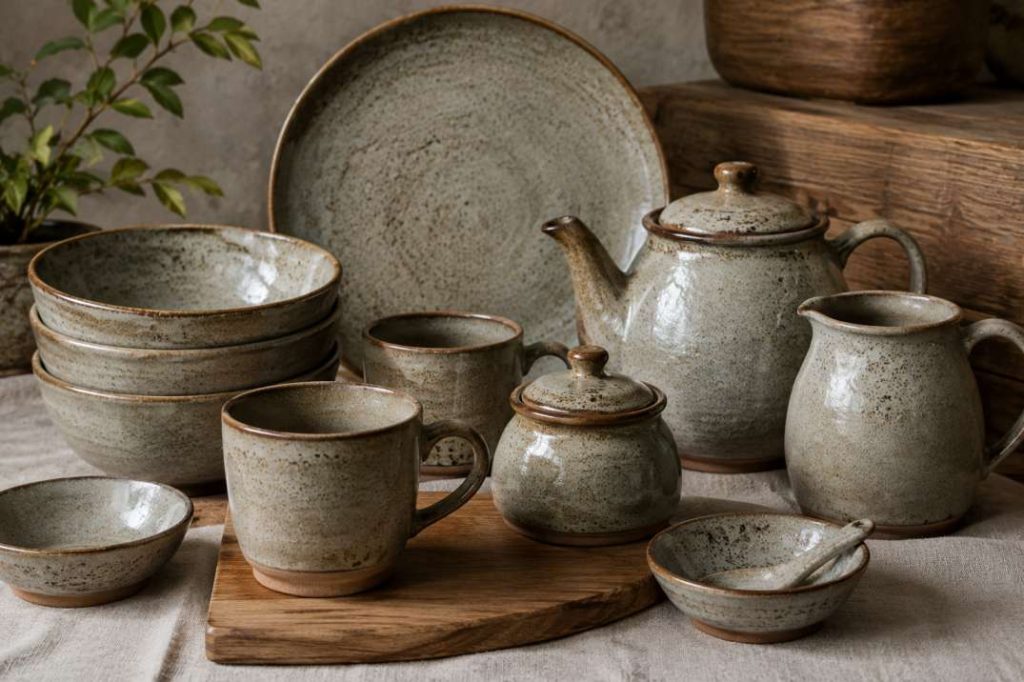
Stoneware is stronger than earthenware because it is fired at a much higher temperature, usually around 1200°C to 1300°C.
At this heat, something very important happens inside the clay.
The tiny particles begin melting slightly and joining together tightly. This process is called vitrification.
Don’t worry about the difficult word.
Vitrification simply means the clay becomes denser, tighter, and more glass-like inside.
Because of this:
* Fewer pores remain
* Water cannot enter easily
* The pottery becomes much stronger
How Stoneware Feels:
* Smooth and solid
* Strong and durable
* Slightly heavy
* Perfect for daily use
Common Examples:
* Dinner plates
* Coffee mugs
* Baking dishes
* Restaurant crockery
Advantages:
* Stronger than earthenware
* Good for daily use
* Holds heat well
* Usually microwave and dishwasher safe
Disadvantages:
* Heavier than porcelain
* Can still chip if dropped
Stoneware is popular because it gives a balance between beauty and strength.
If earthenware is like a biscuit, stoneware is more like a brick baked at very high heat.
3. Porcelain — The Finest and Most Refined
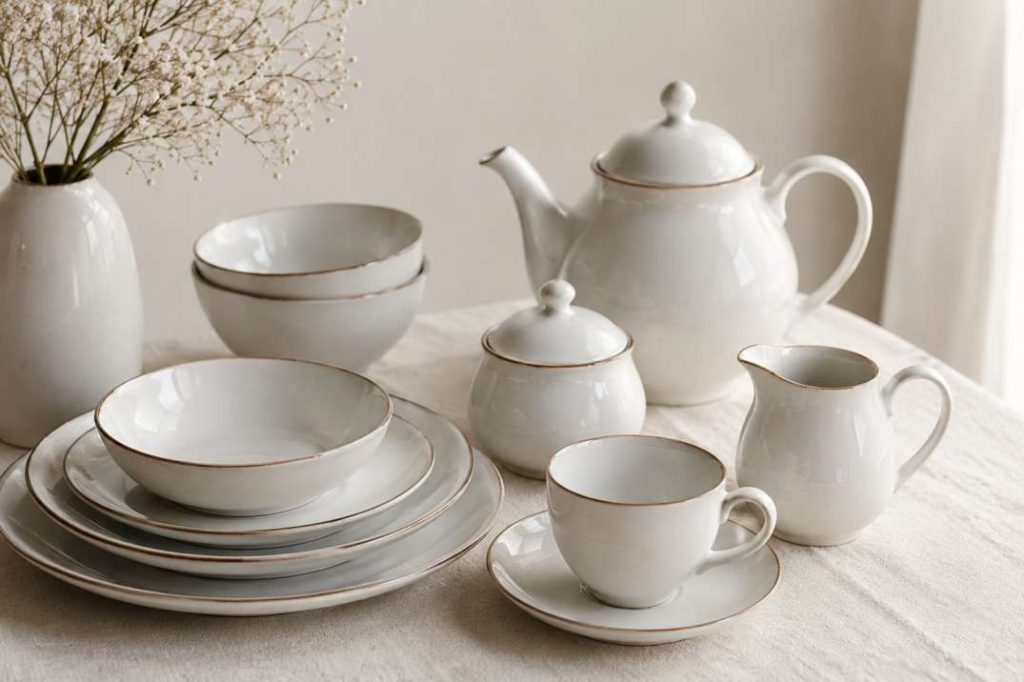
Porcelain is considered the most refined type of pottery.
It is made using very pure clay materials like kaolin clay and fired at extremely high temperatures, usually around 1200°C to 1450°C.
At this level of heat, the particles inside become packed together extremely tightly.
This makes porcelain:
* Very hard
* Very dense
* Sometimes even slightly transparent
Yes, some thin porcelain cups allow light to pass through them a little.
How Porcelain Feels:
* Very smooth
* Elegant and fine
* Lightweight but strong
* Clean and polished
Common Examples:
* Luxury dinner sets
* Fine tea cups
* Hotel crockery
* Decorative figurines
Advantages:
* Very strong despite being thin
* Non-porous
* Elegant appearance
* Long-lasting
Disadvantages:
* More expensive
* Harder to manufacture
Porcelain is like glass mixed with clay. It looks delicate but is actually very strong because of its dense structure.
Why Temperature Matters So Much
The biggest difference between these three types is the firing temperature.
Higher heat changes the clay structure more deeply.
Here’s a simple way to understand it:
Earthenware:
* Low firing temperature
* Softer
* Absorbs more water
Stoneware:
* Medium-high firing temperature
* Strong
* Absorbs very little water
Porcelain:
* Very high firing temperature
* Very strong
* Hardly absorbs water
The hotter the firing:
* The denser the clay becomes
* The stronger it gets
* The less water it absorbs
That is why porcelain and stoneware are usually better for modern kitchens.
Final Thoughts
Even though stoneware, porcelain, and earthenware all begin as simple clay, heat changes them into completely different materials.
Earthenware feels warm, natural, and traditional.
Stoneware feels practical and durable.
Porcelain feels elegant, refined, and premium.
The magic happens inside the kiln, where temperature transforms soft clay into something useful, beautiful, and long-lasting.
Next time you hold a mug or plate, you’ll know there’s actually science hidden inside it.